
Premium
Ancient Bodrum Walk
A guided route focused on Bodrum’s ancient remains and cultural identity.
From €Book now
Destination guide
Mugla / Fethiye
One of the world’s most scenic hiking routes, the Lycian Way connects ancient cities, coastal paths and breathtaking landscapes along Turkey’s Mediterranean coast.
Featured selection
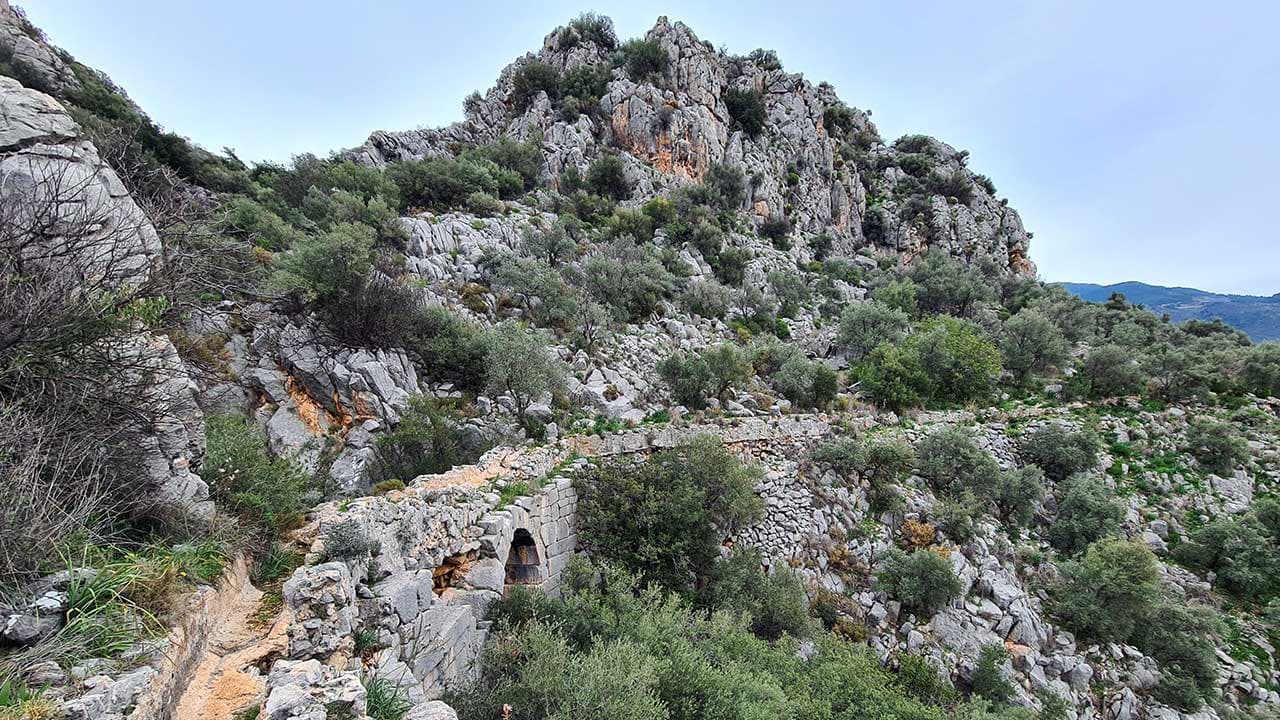
The Lycian Way is one of the most famous long-distance hiking routes in the world, stretching along Turkey’s Mediterranean coastline from Fethiye to Antalya. Starting near Ölüdeniz, the route offers a unique journey where nature, history and breathtaking sea views come together in one unforgettable experience.
The Lycian Way follows ancient paths that once connected the cities of the Lycian civilization. These routes were used for trade, communication and daily life, later improved during the Roman period and preserved over time. Today, the trail allows visitors to walk through the same landscapes that have been part of history for thousands of years.
The Lycian Way offers a rare opportunity to experience both nature and history in a single journey. It is one of the few places where you can walk along dramatic coastlines, pass through ancient ruins and discover hidden villages all in one route.
Along the route, visitors can explore ancient cities such as Patara, Olympos and Xanthos, as well as traditional villages and remote coastal landscapes. The trail also includes panoramic viewpoints, hidden beaches and natural landmarks that make every section unique.
The Lycian Way is ideal for hikers, nature lovers and travellers seeking adventure and exploration. It is suitable for both experienced trekkers and casual walkers who want to experience selected sections of the route.
The best time to walk the Lycian Way is during spring and autumn, when the weather is mild and suitable for long-distance hiking. Summer months can be too hot for extended walks, especially during midday hours.
Different sections of the Lycian Way can be accessed بسهولة from Fethiye and surrounding towns. Many visitors choose to explore specific parts of the route rather than completing the entire trail, using local transport or guided tours.