
Premium
Ancient Bodrum Walk
A guided route focused on Bodrum’s ancient remains and cultural identity.
From €35Book now
Destination guide
Mugla / Marmaris
Marmaris Castle is one of the most iconic historical landmarks in the city, offering panoramic views over the harbor and housing the Marmaris Museum.
Featured selection
Premium
A guided route focused on Bodrum’s ancient remains and cultural identity.
Premium
Explore the most important historical layers of Bodrum.
Premium
An evening experience combining views, culture and history.
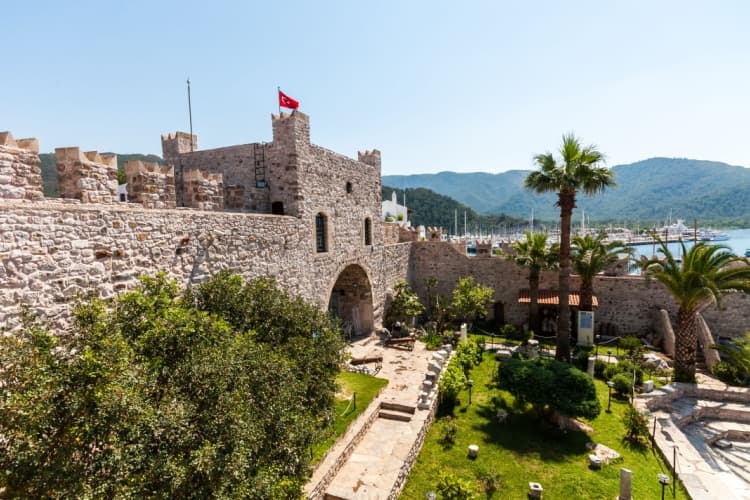
Located on a hill overlooking Marmaris Harbor, Marmaris Castle is one of the city’s most important historical structures. Today, it serves as a museum, combining breathtaking views with a rich archaeological collection.
Marmaris Castle has a long history that dates back to ancient times. The earliest references come from the historian Herodotus, who suggested that the first fortification may have been built around the 3rd millennium BC. The castle gained its current form during the Ottoman period. According to Evliya Çelebi, it was rebuilt in 1522 by Sultan Suleiman the Magnificent during the Rhodes campaign and used as a military base. The structure was built on a rocky peninsula overlooking the sea and features defensive walls, towers, and interior chambers designed for both military and administrative purposes.
Today, Marmaris Castle functions as the Marmaris Museum. Inside, visitors can explore exhibition halls displaying artifacts from the Bronze Age through the Byzantine and Ottoman periods. The museum features sculptures, amphorae, figurines, and everyday objects discovered in nearby ancient sites such as Knidos. One of the highlights is the Knidos Hall, where important archaeological pieces are displayed .• One of the best viewpoints in Marmaris • Historical castle with panoramic harbor views • Rich archaeological museum • Easy access from Marmaris center
Visitors can walk along the castle walls, explore exhibition rooms, and enjoy the view over the marina and old town. The inner courtyard also hosts open-air displays. Marmaris Museum Exhibition Halls Marmaris Castle today serves as a museum with several exhibition halls, each showcasing different periods and archaeological findings from the region. Knidos Hall features artifacts discovered during excavations in the ancient city of Knidos. Visitors can see marble sculptures, statue heads, figurines, decorative objects, amphorae and daily-use items. Among the most remarkable pieces are a bronze scabbard believed to belong to a large statue and a seated priest sculpture, both considered among the most important exhibits of the museum. This hall displays artifacts uncovered during excavations in Burgaz and the Apollo Sanctuary near Emecik village. The collection mainly consists of limestone figurines and terracotta objects dating back to the Archaic period. These pieces represent one of the most significant archaeological collections in the museum, reflecting early religious and artistic traditions of the region. This section presents artifacts collected from Marmaris and its surrounding ancient settlements. Visitors can explore gold objects, coins, jewelry, glass items and everyday tools. The exhibits provide insight into the ancient cities of Physkos, Amos, Kastabos, Hydas, Erine, Tymnos, Bybassos and Phoenix, highlighting the rich cultural history of the region. The Stone Works Hall displays architectural and funerary elements such as tombstones, ossuaries (bone containers), friezes and sculptural fragments. These pieces offer a deeper understanding of burial traditions and architectural styles across different historical periods.
• History lovers • Culture travelers • Families • First-time visitors to Marmaris
Morning or late afternoon is ideal, especially to enjoy the views without crowds and heat.
Marmaris Castle is located in the old town and can be reached on foot from the marina area. The walk includes narrow streets and small shops, making it part of the experience.